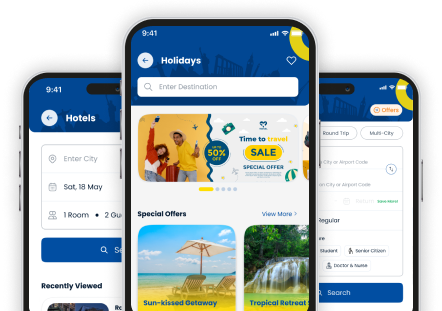
Get Thomas Cook App for
Best Travel Experience
deals on flights, Stay & activities
Download the App Now


Get Thomas Cook App
For Exclusive Deals & discounts

We use cookies to improve your website experience and provide more personalized services to you, both on this website and through other media. By continuing to use this website, you agree to our use of cookies as explained in our Cookie Policy. Please read our Cookie Policy for more information on how we use cookies and how you can disable them.
I understand

In the digital age, consuming media is a performative act. We watch "prestige TV" to participate in online discourse or use trending audio to signal our membership in a specific subculture. Popular media serves as a social glue; even as our viewing habits become more solitary, our discussion of that content remains intensely social, taking place in real-time on global platforms. 5. The Challenge of "Content Fatigue" In the digital age, consuming media is a performative act
For decades, popular media was defined by "appointment viewing"—gatekeepers like movie studios and TV networks decided what reached the masses. Now, the power has shifted to algorithmic discovery. Platforms like TikTok, Netflix, and Spotify use predictive modeling to serve content tailored to individual psychological profiles. This has ended the era of the "monoculture," where everyone watched the same show at the same time, replacing it with fragmented "niche-cultures." 2. The Creator Economy and Democratization
The barrier to entry for media production has vanished. A teenager with a smartphone can command a larger audience than a traditional cable network. This democratization has birthed the "Creator Economy," where authenticity often outranks high production value. Popular media is no longer just polished Hollywood cinema; it includes live streams, video essays, and "parasocial" relationships where audiences feel a personal connection to creators. 3. Transmedia Storytelling and Franchises
The sheer volume of available media has led to "choice paralysis." With infinite scrolls and endless libraries, the value of an individual piece of content can feel diminished. Media companies are now pivoting from "more content" to "better engagement," trying to capture the most valuable resource in the modern world: human attention.
The landscape of entertainment and popular media has transformed from a scheduled, communal experience into a hyper-personalized, 24/7 digital ecosystem. Today, "content" is not just what we watch; it is the currency of social interaction and a primary architect of modern culture. 1. The Shift from Curation to Algorithms
In the current market, standalone stories are rare. Popular media now relies on "universes" (like Marvel or Star Wars) that span movies, streaming series, video games, and social media lore. This transmedia approach ensures that entertainment is an immersive lifestyle rather than a one-off event. It rewards deep fandom and creates a feedback loop where fan theories can actually influence future scripts. 4. Content as Social Currency
Fill in the email Address that you used to register or book with Thomascook. Platforms like TikTok, Netflix, and Spotify use predictive
We will reset and send your new password.
Please enter the valid email address
Your request for new password has been accepted.
The new password would be emailed to the registered email address, if not registered please do the same