Traits that appear when an individual inherits two copies of a mutated gene, often skipping generations. Examples include Cystic Fibrosis and Sickle Cell Anemia.
"Blutrot - Inherent Patterns" likely refers to a conceptual exploration of biological and genetic blueprints, often framed through the lens of human inheritance and blood-related traits. In a scientific or educational context, this topic delves into how specific characteristics are passed through generations via defined Inheritance Patterns . The Blueprint of "Blutrot" (Blood-Red)
Pedigrees use circles for females and squares for males, with shading to indicate the presence of a trait.
A pattern where an affected person usually has one affected parent. The trait typically appears in every generation, such as in Huntington's disease.
At its core, "Blutrot" (German for "blood-red") signifies the vital fluid that carries our genetic code. Understanding "Inherent Patterns" requires looking at how these codes manifest:
To identify these inherent patterns in a family history, researchers and students often use tools like the Punnett Square to calculate probabilities or a to visualize traits across generations.
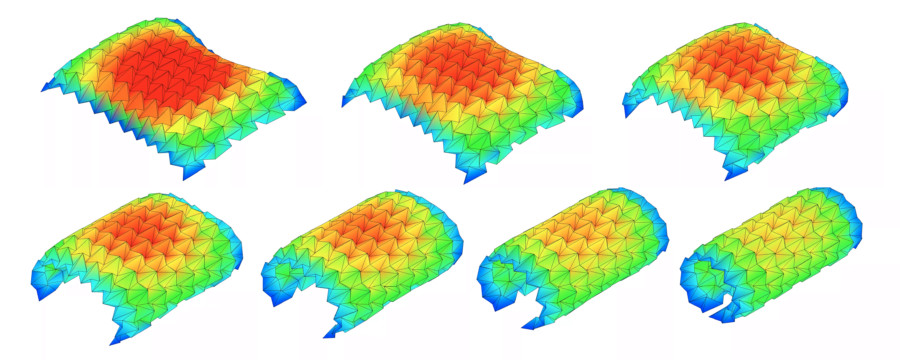
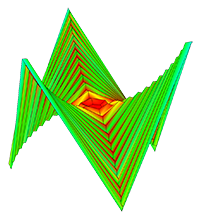
STRAIN VISUALIZATION
Cauchy strain or engineering strain is a unitless measurement of how much a material is being stretched or compressed under load.
The Strain Visualization illustrates the strain across an origami sheet by mapping it to a color from blue (no strain) to red (max strain).